한 (Han): The Korean Word That Explains Why Pansori Makes You Cry Before You Understand a Single Lyric
There's a specific kind of confusion that hits Korean learners in the middle of a 판소리 (pansori, "Korean traditional musical drama") performance. You don't understand most of the words. The melody doesn't follow any structure you recognize. And yet something in the singer's voice reaches through all of that and lands somewhere in your chest. You feel wronged on behalf of someone you've never met, in a story you can barely follow.
That isn't a coincidence. That isn't even purely musical. You're feeling 한 (han, "accumulated sorrow from injustice, loss, and unfulfilled longing — transformed into creative energy") — and the reason it crosses the language barrier so completely is that it was built to. Understanding what 한 actually is, where it came from, and how it lives inside Korean vocabulary will permanently change what you hear when you listen to Korean music, watch Korean drama, and speak Korean with native speakers.
What 한 Is — and Why Every Translation Fails It
The two most common English translations of 한 are "sorrow" and "resentment." Both are wrong in the same way: they describe a static feeling. 한 is not static.
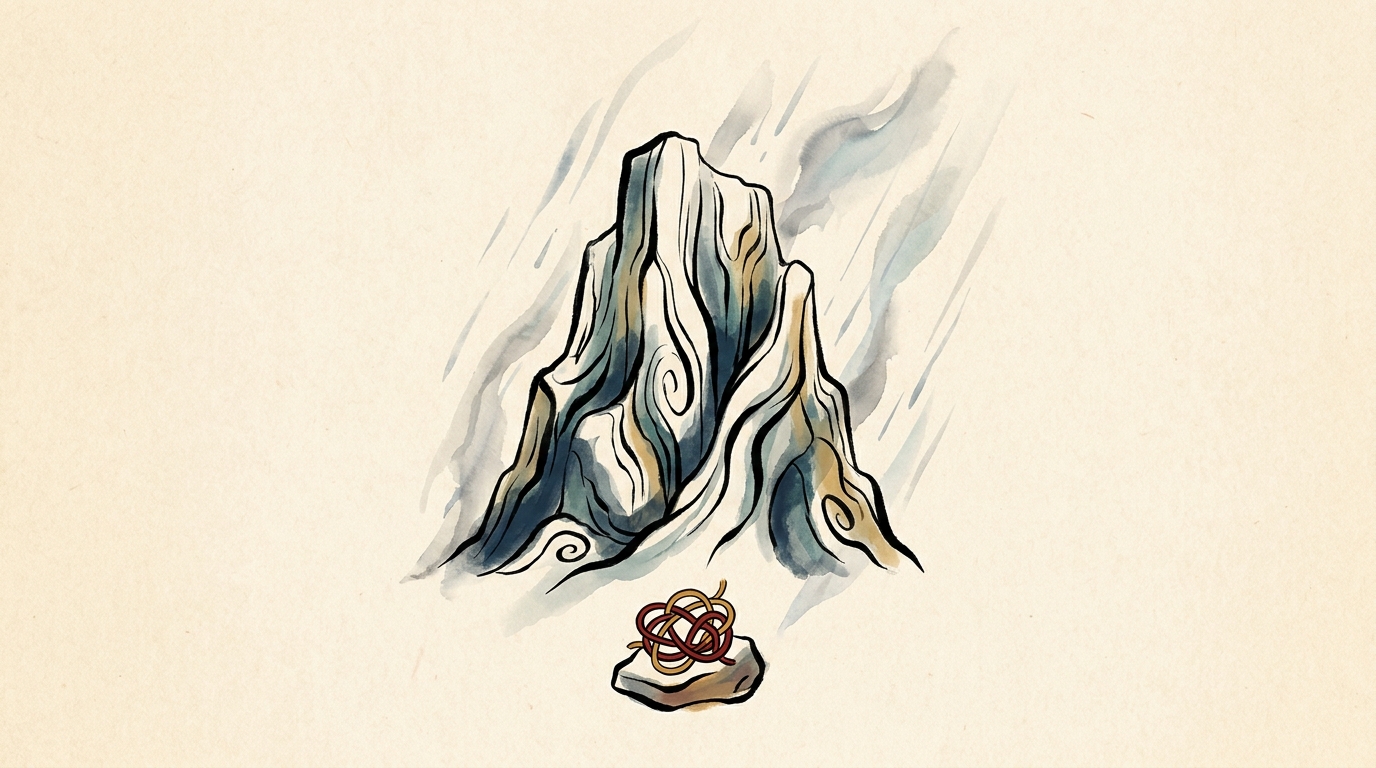
Here is the better image. Sadness is rain. 한 is what happens after centuries of that rain freeze, compress, and become a glacier — something with its own weight, its own momentum, its own capacity to reshape the landscape it moves through. The glacier doesn't just sit there. It carves mountains.
한 (han) contains three things simultaneously: the grief of loss, the moral insistence that the loss was unjust, and the energy that builds until it must come out — as a song, a painting, a shout, a revolution. Remove any one of those three and you no longer have 한. You have something else.
This is why the comparison to Portuguese saudade only goes so far. Saudade is a beautiful ache for something absent — it accepts the loss with a kind of tender resignation. 한 does not accept. It asks: this should not have happened. That moral dimension is what makes 한 generative rather than merely melancholic. And it's why Japanese mono no aware (物の哀れ) — that gentle, quiet appreciation of impermanence — is also the wrong comparison. Mono no aware sighs and lets go. 한 builds until it breaks into art.
The History You Need to Know (in Three Minutes)
한 did not emerge from temperament. It was produced by specific, documented historical weight.
For centuries, the Korean peninsula was invaded and administered by outside powers. Then came 35 years of Japanese colonial rule from 1910 to 1945 — a period during which the Korean language was suppressed in schools and public life, Korean names were replaced with Japanese ones, and cultural identity was systematically dismantled. This was not distant imperial inconvenience. This was your grandmother being forbidden to teach her children her own language.
Then, almost immediately after liberation, came division. The 1945 partition and the Korean War of 1950–1953 split millions of families across a border they could not cross — and in most cases, still cannot. Imagine having a sister in Pyongyang and spending sixty years not knowing whether she was alive.
This is living memory, not museum history. 한 is what happens when that scale of collective injustice has no institutional channel, so it flows into the art, the music, the stories, the food — and into the language itself.
The single biggest mistake non-Korean speakers make is reading 한 as evidence that Koreans are a melancholic people. That gets it precisely backwards. 한 is inseparable from the energy that responds to the grief. South Korea's postwar economic transformation, the global reach of K-culture — these are not separate from 한. They are 한 being converted into momentum.
How 한 Lives Inside Korean Vocabulary
This is where it gets genuinely useful for learners, because 한 is not confined to philosophy. It has a specific vocabulary — and once you learn it as a cluster, the emotional logic of Korean becomes much clearer.
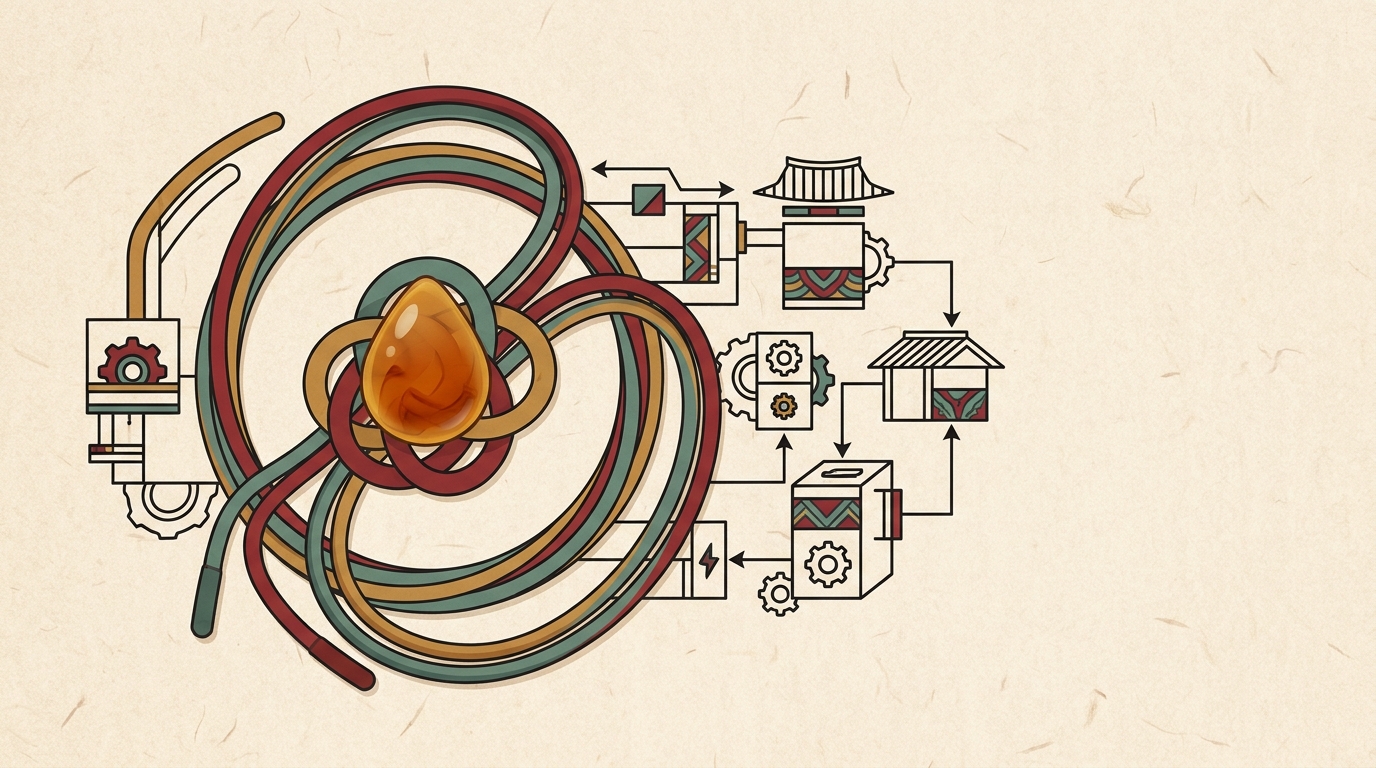
한이 맺히다 (han-i maechida, "han crystallizes into a fixed resentment or regret"). The verb 맺히다 means to form into a knot, to set like resin around a wound. 평생 한이 맺힌 일이에요 (pyeongsaeng han-i maechin irieyo, "It's something that has formed into han over a lifetime"). When Koreans use this phrase, they're describing grief that has solidified — not something you feel and move through, but something that has become part of the structure of a person.
The opposite motion is 한을 풀다 (han-eul pulda, "to release han"). 풀다 (pulda, "to untangle, to release") literally means to untie something bound — and it's one of the most emotionally loaded verbs in the language precisely because it works equally on a tangled rope and a lifetime of grief. 드디어 한을 풀었다 (deudieo han-eul pureotda, "Finally the han has been released"). When a pansori singer performs for hours until the audience is weeping and then somehow feels lighter, that is 한을 풀다 happening in real time. The performance is the therapy.
The adjective 한스럽다 (hanseureopda, "full of han, saturated with this quality of sorrow") operates at a literary register — you'll encounter it in song criticism and poetry, rarely in a text message. 한스러운 삶 (hanseureon salm, "a life full of han"). When you see this word, you're being signaled that the speaker is framing something in the full historical and emotional weight of 한, not just commenting on a bad day.
Now here's the word that will appear in daily life, possibly before the end of this week: 억울하다 (eok-ul-ha-da, "to feel wronged, unjustly treated — the everyday emotional vocabulary closest to han"). This is han's street-level cousin. 너무 억울해요 (neomu eogulhaeyo, "It's so unjust / I feel so wronged"). The crucial nuance: 억울하다 isn't simply being sad that something bad happened. It's the specific sensation of undeserved suffering — the feeling that the universe made an error at your expense. You lose a game because someone cheated: 억울해! You get blamed at work for your colleague's mistake: 억울해! The word carries the DNA of 한 without the centuries of historical weight, which is why it's usable in casual conversation and why native speakers reach for it constantly.
For a more formal, literary register of the same feeling: 원통하다 (wontong-hada, "deeply grievous, resentful in a way that demands to be acknowledged"). 원통해서 잠을 못 잡니다 (wontonghae-seo jameul mot jamnida, "I can't sleep because of the grievance"). Where 억울하다 is something you'd text a friend, 원통하다 belongs in eulogies, courtroom speeches, and historical dramas. The emotional content is similar; the register is entirely different.
Then there's 넋두리 (neokduri, "a lament — a long verbal outpouring of han"). 넋두리를 늘어놓다 (neokdurireul neureo-nota, "to deliver a lament"). This is han as monologue — the long, winding complaint-as-catharsis that knows it's going on too long and continues anyway, because stopping would mean swallowing the grief again. Once you recognize 넋두리 as a culturally specific structure, entire categories of Korean drama scenes stop seeming melodramatic and start making perfect sense.
Finally, the adjective that best captures what 한 feels like in the body: 서럽다 (seo-reop-da, "plaintively sorrowful — a sadness that wants to cry and to be heard"). This is not the same as 슬프다 (seulpeuda, "sad"). 슬프다 is neutral sorrow. 서럽다 carries a plea inside it — it's the crying that says someone should have stopped this from happening. 서럽게 울다 (seoreopge ulda, "to cry with a deep, sorrowful ache") appears in song lyrics, literary descriptions of childhood injustice, and the loneliness of being misunderstood. When you see 서럽다 where you might have expected 슬프다, the writer is pointing you directly at han's texture.
한 in Sound: From Pansori to K-Pop
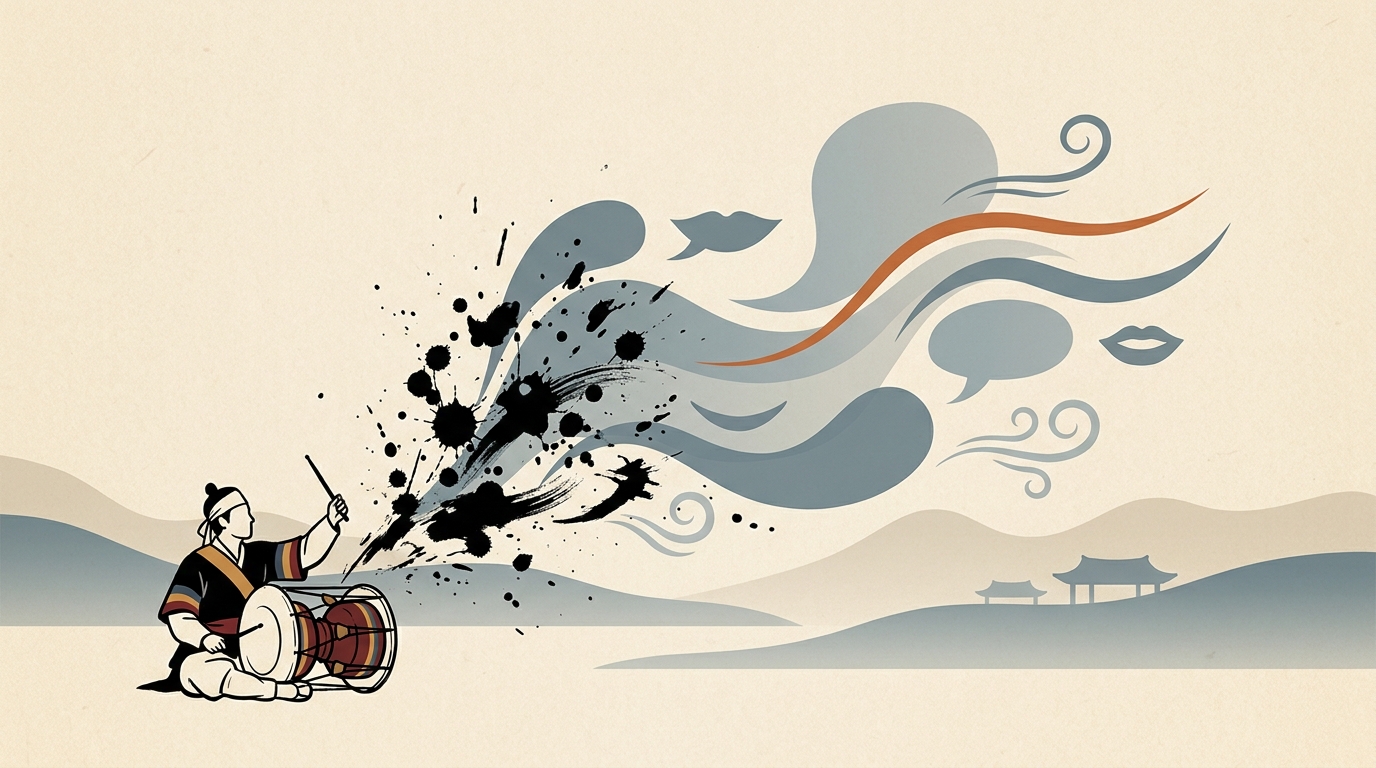
판소리 (pansori) is the art form built specifically to perform and release 한. A single 소리꾼 (sorikkun, "pansori singer") performs for hours — sometimes an entire day — accompanied only by a drummer, telling stories like 〈춘향가〉 (Chunhyangga, "Song of Chunhyang") and 〈심청가〉 (Simcheongga, "Song of Simcheong"): narratives of separation, injustice, and love tested past its limits. The voice breaks, wails, recovers, breaks again. What you're watching is not a performance of sadness — it's the process of 한을 풀다 conducted live, in public, as a communal act.
Trot — 트로트 (teuroteu) — carries han into popular music. Singers like 나훈아 (Na Hoon-a) and 이미자 (Lee Mi-ja) built entire careers on giving han a melody that ordinary people could sing along to on a bus. And in contemporary K-pop, han hasn't disappeared — it's been translated. BTS's "Spring Day," with its imagery of waiting across an impossible distance, resonates globally precisely because the emotion it carries is universal even when the Korean word for it isn't.
Apply This in the Next Five Minutes
Pick any Korean song, drama scene, or poem that gave you that unnamed feeling — the heavy, beautiful ache you couldn't explain. Then run through this:
Listen for 맺히다 and 풀다. Does anything solidify into grief? Does anything get released? These verbs mark the emotional architecture of the scene.
Find the 억울하다 moment. When does a character feel not just hurt, but unjustly hurt? That's the han trigger — the moment where sorrow becomes moral claim.
Check the crying vocabulary. If a song describes weeping, is the word 서럽다 or 슬프다? That single word choice tells you whether you're in han territory or ordinary sadness.
Spot the 넋두리 scene. The long monologue where a character just talks about their suffering without resolution — that structure is culturally deliberate, not poor screenwriting.
Korean historical dramas — 사극 (saguk, "historical drama") — are the richest training ground for this. Scenes that once seemed over-the-top will start reading as something more precise: a culture processing centuries of collective grief through the only channel that was always available to it.
The next time a pansori singer's voice cracks in a way that sends electricity through a room you're sitting in, you'll know what you're touching. Not Korean sadness. The energy that refused to let that sadness be the end of the story — and turned it into some of the most powerful art, music, and language in the world.
You felt it before you had the word for it. Now you have the word, and the whole vocabulary that surrounds it. That's exactly how this is supposed to work.
🔊 Pronunciation Guide
Native-speed audio for the Korean in this article. Listen, then shadow out loud.
The exact phrases Koreans actually use every day — with the nuance notes that keep you from sounding like a textbook. Delivered as a beautiful PDF, free.
Send Me the Free PDFNo spam. Unsubscribe anytime.