Your Korean Is Fine. Your 눈치 Isn't. Here's Why That Matters More.
- • The Word That Doesn't Translate
- • Why Korea Built an Entire Social System Around the Unspoken
- • What 눈치 Actually Looks Like in a Conversation
- • The Vocabulary of Unspoken Things
- • Phrases That Sound Like Nothing But Mean Everything
- • Apply This in Your Next Conversation
- • The Highest Compliment in Korea
You passed TOPIK. You can order food, argue about politics, and text your Korean friends without Google Translate. But sometimes — in a group dinner, in a work meeting, in a casual conversation — something goes slightly wrong. Nobody says anything. Nobody corrects you. But you feel it: a half-second of silence, a topic that shifts too quickly, a smile that doesn't quite reach the eyes.
That feeling has a name. And the reason your textbook never mentioned it is that it isn't a grammar problem at all.
The Word That Doesn't Translate
눈치 (nun-chi, "the social intelligence to read unspoken situations") resists translation not because English lacks the vocabulary, but because English-speaking cultures don't need the concept the way Korean culture does. "Reading the room," "picking up on vibes," "social awareness" — these get at fragments of it. But 눈치 is the whole system, not a fragment.
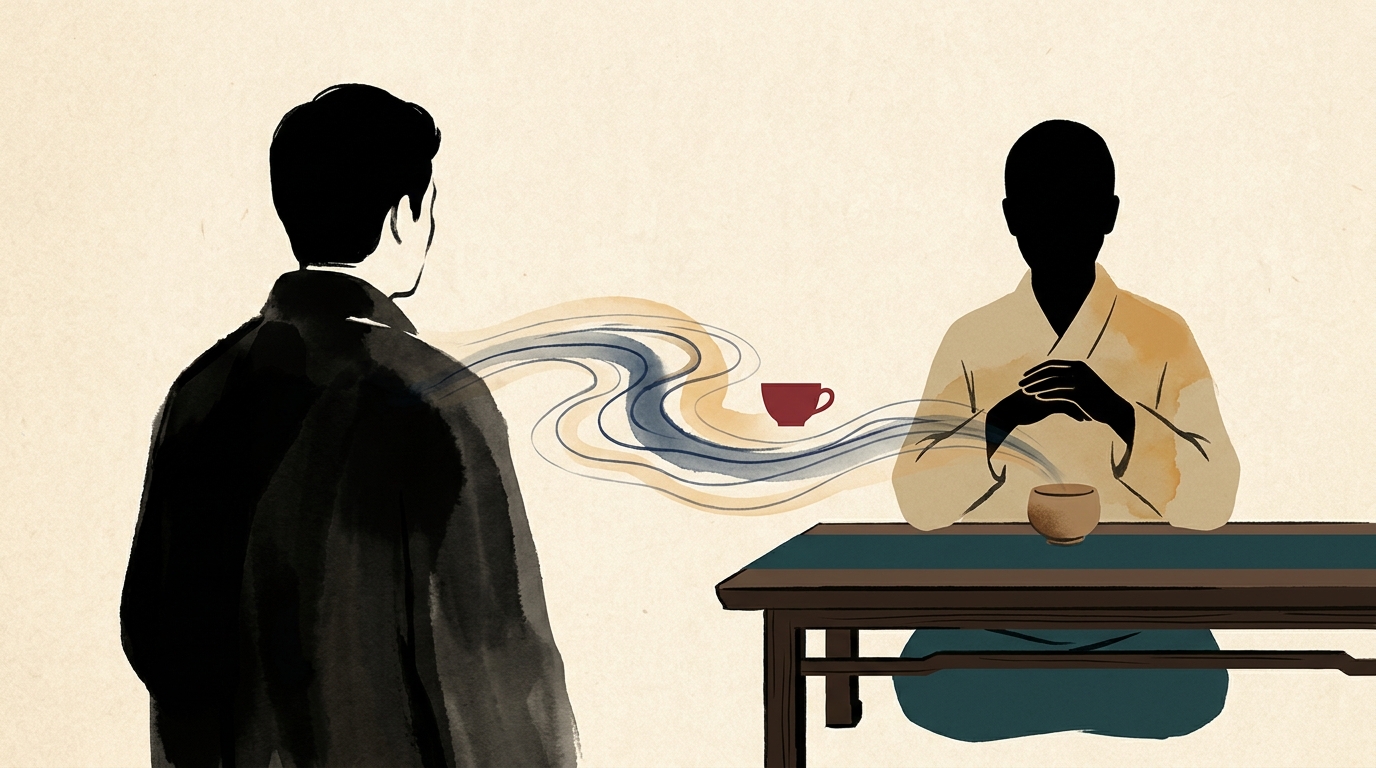
The word itself is the first clue. 눈 (nun) means "eye," and 치 is a measuring suffix. So 눈치, literally, is the measure of one's eyes — how precisely you gauge a situation before anyone opens their mouth. The metaphor is exact: 눈치 is perception that precedes language. It's what you're supposed to already know.
And here's the part most explanations miss: 눈치 is not a personality trait some people happen to have. In Korean social life, it's a baseline expectation — the way literacy is a baseline expectation in school. You're assumed to have it. If you don't, no one will say so directly. They'll just feel 답답하다 (dap-dap-ha-da, "a frustrated, suffocating feeling — the specific emotion you feel toward someone with no nunchi") around you, and you'll keep sensing that something is off without knowing why.
답답하다 is one of the most commonly used emotional expressions in Korean, and it has no clean English equivalent. It's not simple annoyance. It's the feeling of watching someone miss something obvious, of wanting to reach through the conversation and fix it for them, but being unable to. When a Korean friend says 너무 답답해 (neomu dap-dap-hae) about someone, they're describing a specifically Korean kind of social frustration — the friction that builds when 눈치 is absent. The fact that Korean needed a dedicated word for this feeling tells you how central 눈치 is to the culture.
Why Korea Built an Entire Social System Around the Unspoken
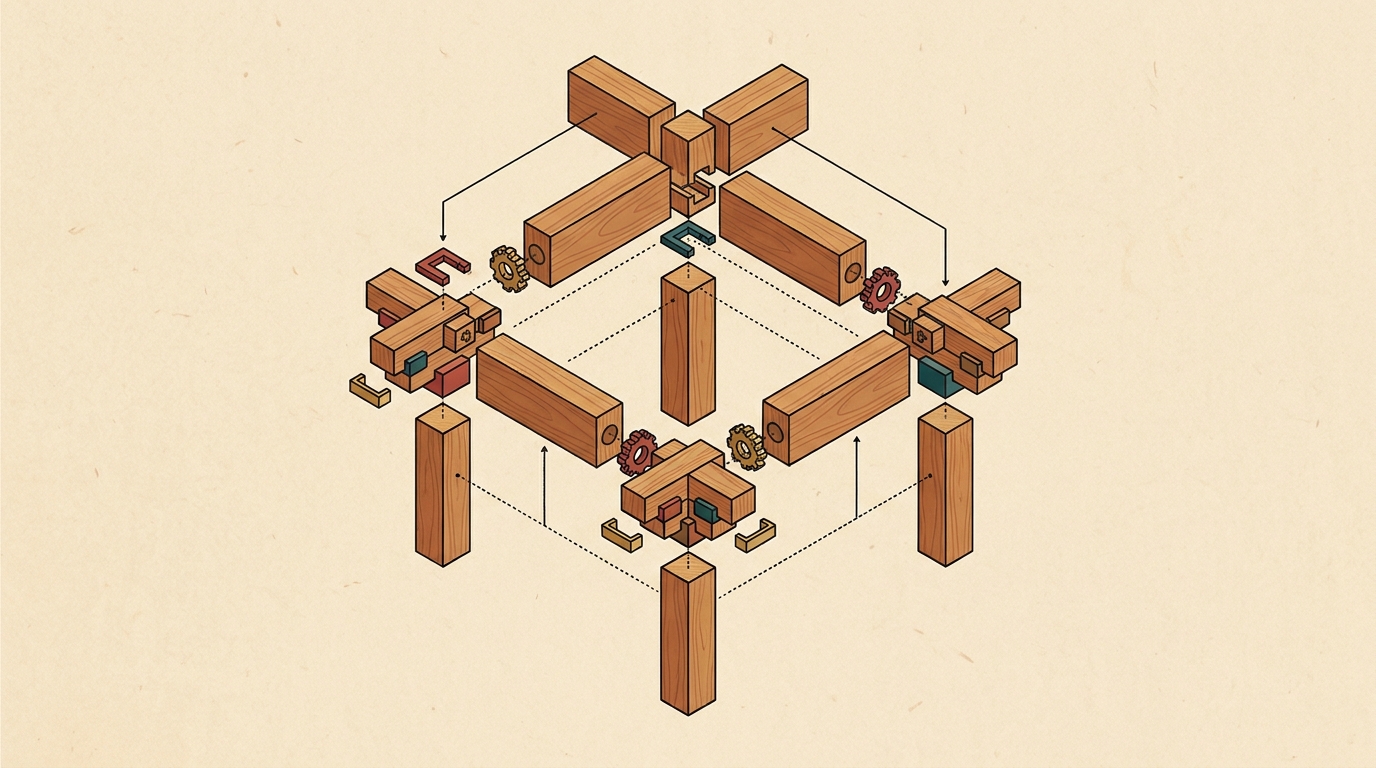
눈치 didn't appear out of nowhere. It has deep roots in Confucian hierarchy, where reading your superior's wishes before they voiced them was a mark of competence. Waiting to be told was a sign you weren't paying attention. That expectation filtered down through centuries into everyday social life — not just in formal settings, but in families, friendships, and dinner tables.
Underneath all of it is the value of 화합 (hwa-hap, "collective harmony — the social glue that makes indirect communication necessary"). Korean culture has historically prioritized group cohesion over individual expression. Direct communication — especially direct refusal or disagreement — risks fracturing that harmony. So instead of saying what you mean outright, you signal. And you expect the other person to receive the signal. 눈치 is the skill that makes this invisible negotiation work. Without it, the whole system jams.
The cultural expectation is captured in one proverb: 말 안 해도 알아야지 — "You should know even without being told." This isn't a suggestion. It's the social contract. And it explains why a learner can have perfect grammar and still leave every conversation feeling like they missed something.
What 눈치 Actually Looks Like in a Conversation
Here's where language learners hit the wall. You've learned that 아니요 (aniyo) means "no" and 싫어요 (sireoyo) means "I don't like it." Technically, you're right. But Korean speakers rarely use these words to actually decline something.
Instead, listen for 그게 좀... (geuge jom..., "that's a bit...") or 어... 그날은 좀... (eo... geunaleun jom..., "hmm, that day is a bit...") or 생각해볼게요 (saenggakhaebolggeyo, "I'll think about it"). In most contexts, these are a "no." A decided, final no — wrapped in enough softness to protect the other person's dignity. A learner without 눈치 hears ambiguity and pushes forward. A learner with 눈치 hears 그게 좀... and understands immediately: this door is closed. Don't knock again.
The same logic explains the "three-refusal rule." When a Korean person offers you food or invites you somewhere, they may expect you to decline once or twice out of politeness before accepting. A third refusal signals a genuine no. To a foreign learner, this can look like pressure. It's actually a choreographed exchange — and both sides are supposed to know the steps. If you accept on the first offer, you haven't done anything grammatically wrong. But you've skipped a social ritual that the other person was prepared for. That's 눈치 in action, or rather, its absence.
The Vocabulary of Unspoken Things
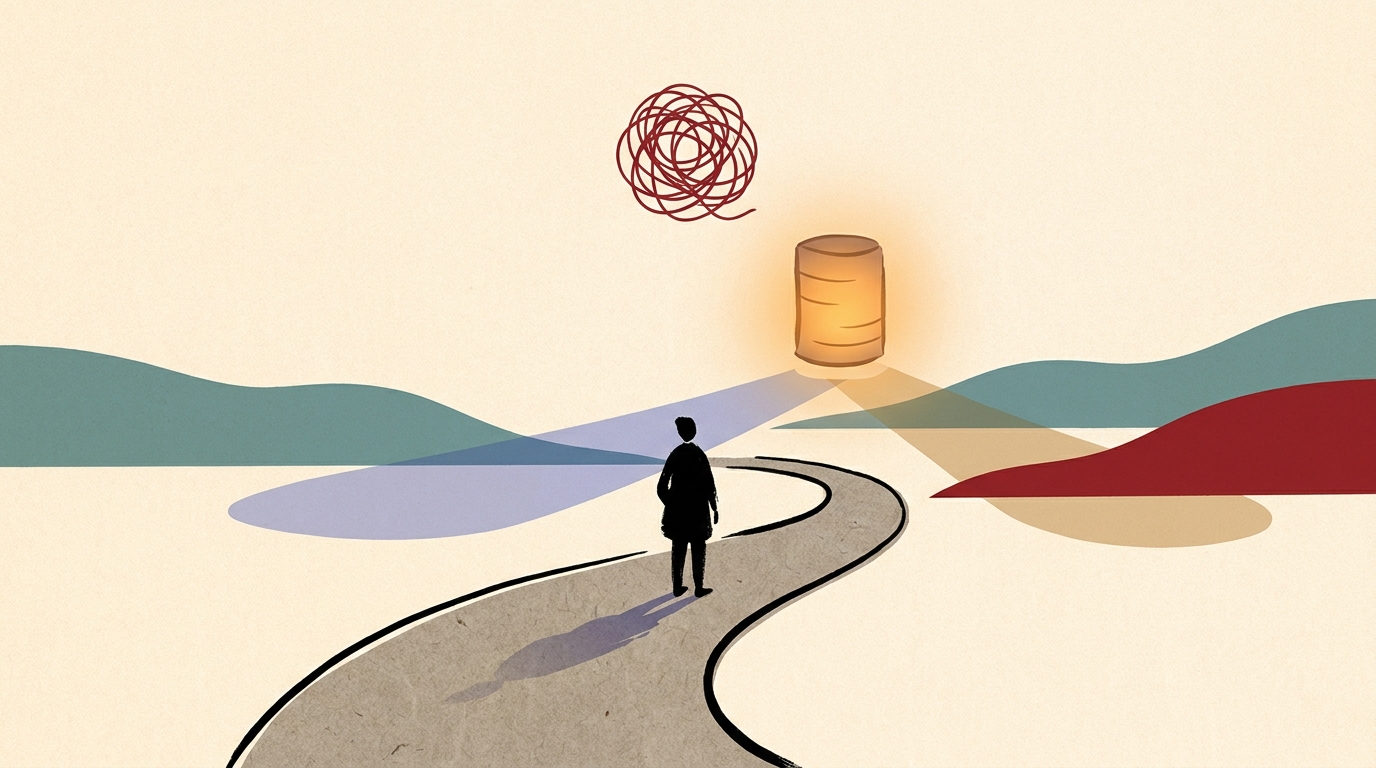
Korean has built an entire lexicon around 눈치. Each word opens a different window into how this system operates.
눈치를 보다 (nun-chi-reul boda, "to watch for social cues before acting") is what you do when you're uncertain about the mood and need to read the room before committing. It's cautious, observant, and considered smart — not hesitant.
눈치껏 하다 (nun-chi-kkeot hada, "to act based on nunchi — figure it out yourself without being told") is the instruction Korean seniors give instead of explicit directions. It means: I'm not going to spell this out. Use your perception. This phrase alone explains an enormous amount about Korean workplace culture. When a manager says it, they're not being lazy. They're testing whether you have the social intelligence to function without hand-holding.
눈치채다 (nun-chi-chae-da, "to sense something through nunchi — to pick up on unspoken signals") is the verb form that shows 눈치 in motion. 눈치챘어? (nun-chi-chaesseo?, "Did you pick up on it?") assumes the other person should have noticed something without being told. The question itself carries a quiet judgment — if you have to ask, something was already missed.
눈치가 빠르다 (nun-chi-ga ppareuda, "quick nunchi — socially perceptive, reads situations fast") is a genuine compliment. 눈치가 없다 (nun-chi-ga eopda, "no nunchi — oblivious to social cues") is, in Korean social terms, a serious deficiency. Not a personality quirk. A deficiency. The gap between those two phrases is the gap between someone who fits and someone who perpetually creates friction without knowing why.
Phrases That Sound Like Nothing But Mean Everything
Korean has a cluster of expressions that look almost meaningless on paper but carry enormous social weight:
있잖아... (itjanha..., "there's something, you know...") is a soft opener that signals something significant is coming. The expectation is that a 눈치-aware listener starts reading the speaker's mood before the actual content arrives. You're not waiting for information — you're already gathering it.
뭔가 좀 그런 것 같아 (mwonga jom geureon geot gata, "something feels a bit... like that") sounds like uncertainty. It isn't. It's indirect communication operating at full strength — a complete thought, deliberately left unfinished so you can complete it yourself.
뭐, 뭐 그렇죠 (mwo, mwo geureochyo, "well, it's kind of like that") is a non-committal response that signals the speaker doesn't want to commit, disagree, or go further. The 눈치-aware move is to receive it as a boundary and change direction. The 눈치-unaware move is to ask "but what do you actually mean?" — which forces an explicitness the speaker was specifically trying to avoid.
These phrases frustrate learners because they seem empty. They're not empty. They're full — of exactly the kind of meaning that 눈치 is designed to carry.
Apply This in Your Next Conversation
Stop listening only to what is said. Start listening to what is not said. Here are three concrete signals to watch for — you can start noticing them today:
1. The topic shift. You raise something and the other person suddenly changes the subject. That's not coincidence. Something about your topic was uncomfortable. Don't follow up. File it.
2. The trailing pause. 음... (eum...) held a beat too long, or 그게... (geuge...) that trails off without completing — these are not verbal tics. They're answers. Receive them as answers and move on.
3. The undated invitation. When someone says 우리 집에 한번 오세요 (uri jibe hanbeon oseyo, "come visit our home sometime"), pause before you pull out your calendar. If no specific date follows, this may be a warm social gesture rather than a concrete plan. Let the other person set the specifics. If they want to make it real, they will.
None of these require advanced Korean. They require the same quality the word 눈치 was built to describe: attention to what the eyes can catch before the mouth speaks.

The Highest Compliment in Korea
Here's something most learners never hear: Koreans don't actually expect foreigners to have 눈치. The baseline assumption is that you won't. Which means that when you do — when you sense something without being told, when you soften a refusal instead of stating it flat, when you read a silence correctly — the response is something else entirely.
한국인보다 더 한국적이다. "More Korean than a Korean."
That phrase is not hyperbole. It's the highest social praise in this context, because 눈치 is so tied to Korean identity that displaying it as a foreigner signals something beyond language ability. It signals that you understand how Korea thinks — not just what Korea says.
Your grammar can be imperfect. Your accent can give you away in the first syllable. But if your 눈치 is sharp, you will be understood — and genuinely welcomed — in a way that no level of textbook fluency can produce on its own.
The gap between speaking Korean and communicating in Korean is exactly the width of 눈치. Now you know where to look — and what you're looking for.
🔊 Pronunciation Guide
Native-speed audio for the Korean in this article. Listen, then shadow out loud.
The exact phrases Koreans actually use every day — with the nuance notes that keep you from sounding like a textbook. Delivered as a beautiful PDF, free.
Send Me the Free PDFNo spam. Unsubscribe anytime.