Why Koreans Ask Your Age First — It's Not Rude, It's Grammar
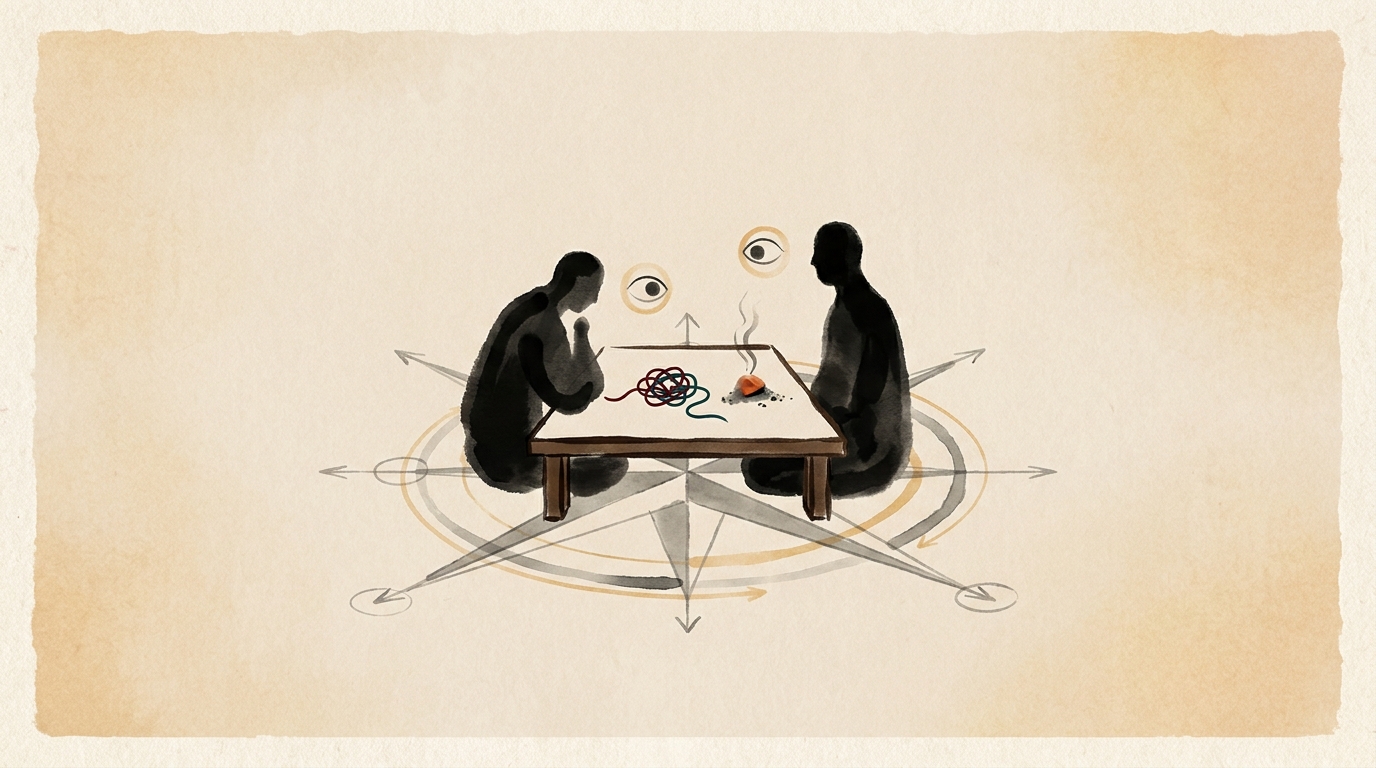
You've just met a Korean person. The small talk is going well — where are you from, how long have you been studying Korean — and then it comes: 몇 살이에요? (myeot sal-i-e-yo?, "How old are you?")
- • The Sentence That Changes Based on Who You Are
- • Korea Has Three Age Systems — Here's the One That Actually Governs Your Social Life
- • How One Year Draws the Entire Social Map
- • Two More Words That Will Immediately Make You Sound Like You Get It
- • What to Actually Do When Someone Asks
- • What Native Speakers Never Think to Tell You
In most Western cultures, that question from a stranger lands somewhere between awkward and intrusive. But the Korean person across from you wasn't being nosy. They were stuck. Without knowing your age, they genuinely don't know which version of Korean to speak to you — and in Korean, that's not a small problem. It's like trying to send an email without knowing whether to write to a colleague, a CEO, or a close friend. The words themselves change.
That's the thing most learners never hear explained: asking your age isn't a social habit Koreans happen to have. It's a grammatical necessity built into the language.
The Sentence That Changes Based on Who You Are
Take a simple question: "Did you eat?" In English, it's the same sentence for everyone. In Korean, it isn't.
To someone older: 식사하셨어요? (sik-sa-ha-syeo-sseo-yo?, "Have you had your meal?" — formal, respectful) To a peer or someone younger: 밥 먹었어? (bap meo-geo-sseo?, "Did you eat?" — casual)
Same meaning. Completely different sentence. And the thing that determines which version is correct? Age. Not always — relationship and context matter too — but age is the fastest, most reliable signal Korean speakers use to calibrate. When a Korean person asks 몇 살이에요?, they're not making small talk. They're gathering the one piece of information they need to speak to you properly.
This is the editorial angle most articles on this topic miss: age in Korea isn't a social curiosity. It's a language setting. And until it's configured, the conversation is running on defaults.
Korea Has Three Age Systems — Here's the One That Actually Governs Your Social Life
This is where learners get genuinely tripped up, because Korea doesn't use one age system. It uses three, and they give you different numbers.
세는나이 / 한국 나이 (se-neun na-i / han-guk na-i, "Korean age") is the system that governs daily social life. Everyone is born at age 1 — not 0 — and gains a year on January 1st, regardless of birthday. Born on December 31, 2000? You were 1 on the day you arrived, and 2 the very next morning. After Korea's 2023 legal reform, the official term became 세는나이, though most Koreans still just say 한국 나이 without thinking twice.
만 나이 (man na-i, "international age") works the way you're used to: you only age after your actual birthday passes. That same December 31 baby would be 23 in January 2024 — birthday hasn't come yet. Since June 28, 2023, 만 나이 became Korea's legal standard, used in medical records, contracts, and official documents. You'll see it marked explicitly: 만 스물다섯 살 (man seumul-da-seot sal, "25 years old [international age]"), with 만 placed in front precisely to signal which system is being used. The law changed. The language did not — at least not yet.
연나이 (yeon-na-i, "year age") is the simplest: current year minus birth year. Born in 2000? In 2024, your 연나이 is 24. This one surfaces mainly in administrative contexts — school enrollment, military conscription calculations — and almost never in casual conversation.
The practical truth: the 2023 reform changed what goes on official paperwork. It did not change how Koreans speak to each other at a café, a language exchange, or a party. When you meet someone in real life, the conversation will run on 한국 나이. Plan accordingly.
How One Year Draws the Entire Social Map
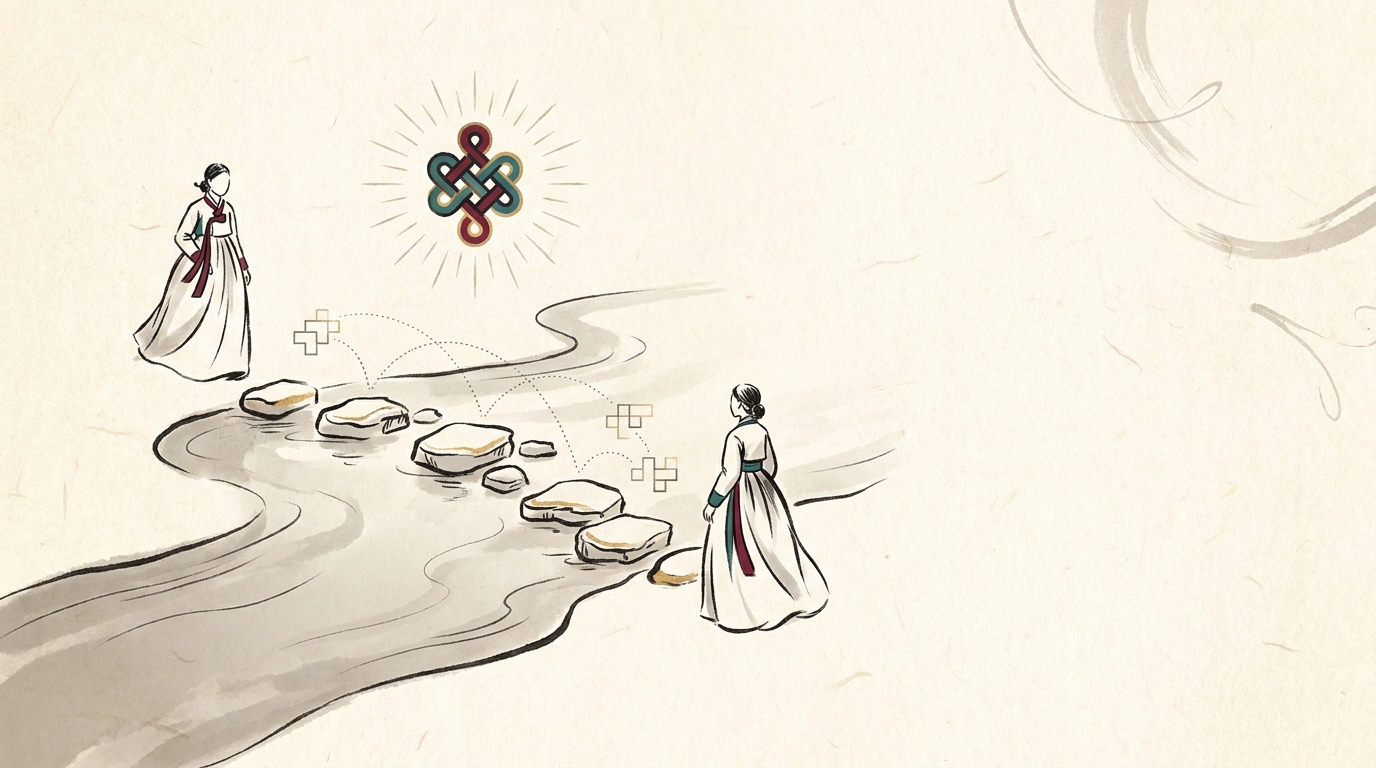
Once two Koreans know each other's ages, something clicks into place almost instantly — and the speed of it surprises most foreign learners.
If someone is two or more Korean years older, 해요체 (hae-yo-che, formal polite speech) is the floor. You say 네, 맞아요 (ne, ma-ja-yo, "Yes, that's right"), not 어, 맞아 (eo, ma-ja) — the casual version that sounds fine in English but reads as slightly rude in Korean directed at a senior.
If you're 동갑 (dong-gap, "the same Korean age"), you start formal, but a door is open. You might hear: 야, 우리 말 트자? (ya, uri mal teu-ja?, "Hey, should we drop the formalities?") — a specific invitation to shift into 반말 (ban-mal, informal speech between equals). The fact that Korean has a dedicated phrase for agreeing to speak casually tells you everything about how deliberate this system is. Informality isn't assumed. It's negotiated.
If someone is younger — even by a single year — you can use 반말 with them, though relationship and setting still matter. And here's the part that consistently surprises Western learners: that one-year gap also determines what you call each other. An older male friend becomes 형 (hyung) if you're male, or 오빠 (oppa) if you're female. An older female friend becomes 언니 (unni) if you're female, or 누나 (nuna) if you're male. These aren't nicknames or terms of endearment layered on top of a name. They replace the name entirely once a relationship is established.
민준 씨 (Min-jun ssi) is polite but keeps you at arm's length. 오빠 closes the distance in a single syllable. Calling a slightly older Korean friend by their given name alone — without a title — can feel unexpectedly cold to them, even if you mean it warmly. The honorific isn't formality. It's recognition.
Two More Words That Will Immediately Make You Sound Like You Get It
Before your next Korean conversation, lock in these two:
연상 / 연하 (yeon-sang / yeon-ha, "older / younger") describes the age relationship between two people. 연상 means the other person is older than you; 연하 means they're younger. These appear everywhere — friendships, workplace dynamics, and especially romantic contexts, where the age gap carries its own social weight. 연상 남자친구 (yeon-sang nam-ja-chin-gu, "an older boyfriend") and 연하 여자친구 (yeon-ha yeo-ja-chin-gu, "a younger girlfriend") are phrases you'll hear constantly in Korean dramas and real conversation. Knowing these words signals that you understand the relational logic behind the language, not just the vocabulary.
What to Actually Do When Someone Asks
Here's what you can use in the next five minutes — or the next conversation.
Don't deflect. A polite Western instinct to say "Oh, I don't usually share my age" will genuinely confuse most Koreans. From their perspective, you've just declined to provide information they need to speak to you correctly. It's a bit like refusing to tell someone your name. They're not prying. Deflecting disrupts the social process before it's even started.
Give your birth year instead of trying to calculate on the spot. Korean age math is easy once you know it, but under social pressure you might second-guess yourself. Skip the mental arithmetic. Just say:
저는 OOO년생이에요. (jeo-neun OOO-nyeon-saeng-i-e-yo., "I was born in [year].")
For example: 저는 1995년생이에요. (jeo-neun cheon-gu-baek-gu-sip-o-nyeon-saeng-i-e-yo., "I was born in 1995.") The Korean person will calculate instantly — they've been doing it their whole life. You don't have to.
If you want to know your own Korean age anyway: current year minus birth year, plus one. Born in 1995? In 2024: 2024 − 1995 + 1 = 30 in Korean age. Simple.
Try asking back: 동갑이에요? (dong-gap-i-e-yo?, "Are we the same age?") If you suspect you might be the same Korean age, this question opens the door to a warmer, more equal dynamic — and the fact that you know the word 동갑 at all will register. Koreans notice when a learner understands the social layer, not just the sounds.
What Native Speakers Never Think to Tell You
Korean speakers absorbed this system as children. It runs automatically now — there's no conscious calculation when they ask your age. Which is exactly why they sometimes forget the question lands differently on you.
They're not being culturally insensitive. They just need that one data point to speak to you correctly, and the idea that someone might not share it freely is, from their side of the conversation, the surprising part.
Here's the native speaker intuition that no textbook spells out: Koreans feel the weight of even a one-year difference. It's not dramatic or hierarchical in a cold way — it's more like a compass reading. One year older means 형 or 언니. Same year means potential equals. One year younger means you can relax your speech, if the relationship develops that way. The whole social map snaps into place from a single number, and everyone in the conversation knows exactly where they stand.
You don't have to adopt every part of that system. But when someone asks 몇 살이에요?, you can now hear it for what it actually is: not nosiness, not rudeness — just a Korean speaker trying to find the right words for you.
Tell them your birth year. Watch their expression settle. The conversation will find its footing almost immediately after, and that won't be a coincidence.
🔊 Pronunciation Guide
Native-speed audio for the Korean in this article. Listen, then shadow out loud.
The exact phrases Koreans actually use every day — with the nuance notes that keep you from sounding like a textbook. Delivered as a beautiful PDF, free.
Send Me the Free PDFNo spam. Unsubscribe anytime.