답정너 (dab-jeong-neo): Why Your Honest Answers Are Killing Your Korean Friendships
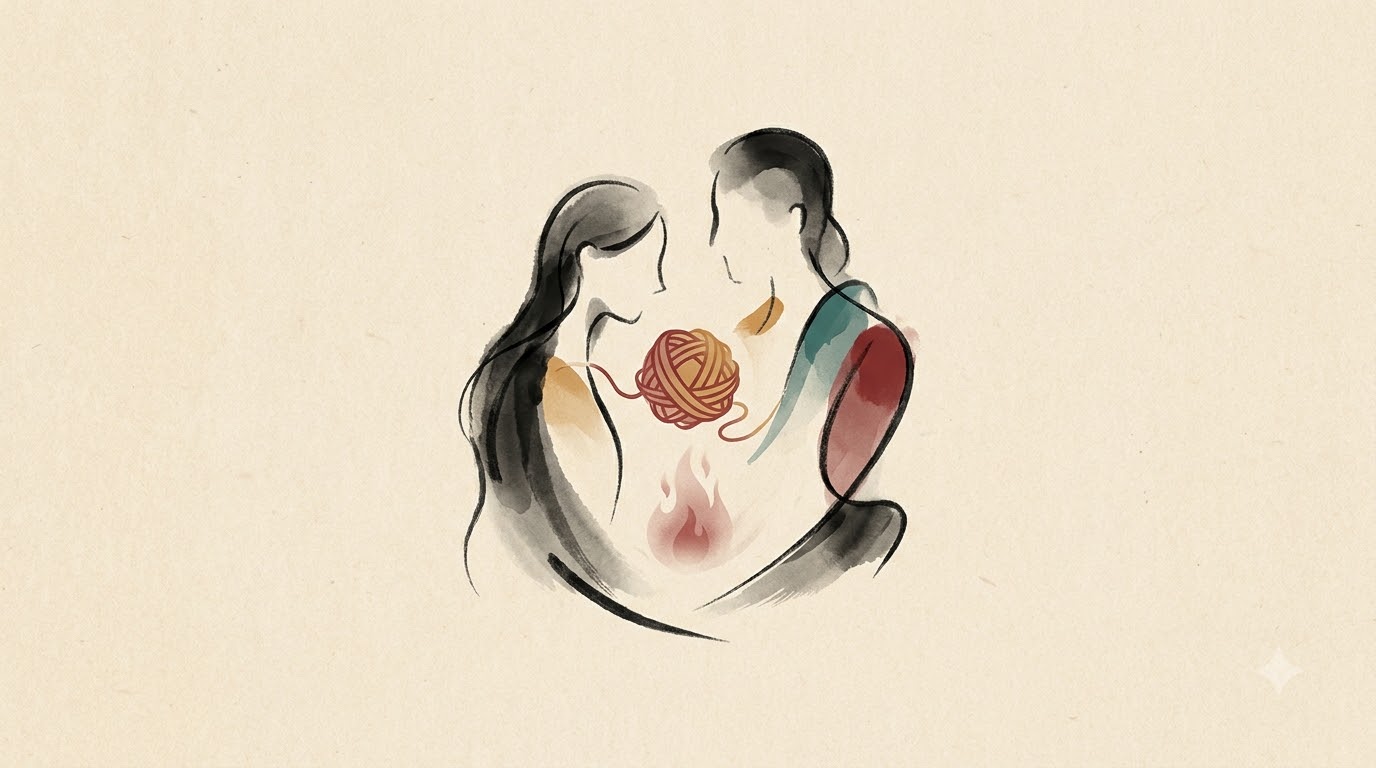
You studied hard. You learned grammar patterns, built a solid vocabulary, and even mastered the subtle art of banmal versus jondaetmal. You feel confident stepping into real conversations with Korean friends. Then, a friend turns to you, looks into a mirror, and asks a seemingly straightforward question.
You think back to everything your Western upbringing and school textbooks taught you: Honesty is the best policy. Objectivity matters. So, you give an honest, factual assessment.
Suddenly, the room goes quiet. The mood turns icy. Your friend looks hurt, changes the subject, and pulls away. You are left standing there, completely bewildered, wondering what offense you just committed. Did you use the wrong speech level? Did you mispronounce a word?
No. You fell straight into one of the most sophisticated rhetorical traps in Korean social life. You treated a relationship ritual as if it were a multiple-choice test with a right and wrong factual answer.
The Anatomy of a Rhetorical Trap
In Korean internet slang and daily culture, this phenomenon is famously known as 답정너 (dab-jeong-neo), which is an abbreviation of "답은 정해져 있고 너는 대답만 하면 돼" (The answer is already decided, and your only job is to say it).
At first glance, it looks like a simple internet meme used to tease people who fish for compliments. But writing it off as mere vanity or a selfish conversational quirk misses the entire point. It is not an information-gathering question. It is a structural survival mechanism designed to protect face, preserve harmony, and manage deep-seated insecurity within interpersonal relationships.
To a native speaker, the surface grammar is an open question, but the underlying function is a declaration of emotional need. The primary engine driving these exchanges is often a quiet wave of 불안 (bul-an), a sudden spike of self-doubt or vulnerability. When someone asks a leading question, they are rarely looking for data. They are looking for a psychological safety net.
While human beings are endlessly diverse and individual personalities vary widely across any culture, this indirect style of reassurance-seeking remains a deeply ingrained tendency in Korean social dynamics. It is a shared conversational code.
The Three Classic Danger Zones
Let us look at how this plays out in everyday life. If you rely on literal interpretations, these scenarios are absolute minefields.
1. Appearance and Style
- Context: Your friend spends ten minutes adjusting their hair, turns to you, and asks: 나 오늘 머리 좀 이상하지? (na o-neul meo-ri jom i-sang-ha-ji?, "Is my hair a bit weird today?")
- The Expected Response: 전혀 안 이상해, 엄청 잘 어울리는데? ("Not weird at all, it suits you amazingly well!")
- The Danger Zone: 응, 살짝 부서진 것 같기도 한데? ("Yeah, it looks a bit messy or broken, actually.")
If you give that honest assessment, you have just violated the unwritten social contract. The expected response demands absolute denial of the flaw and a generous dose of 칭찬 (ching-chan), which refers here to the over-the-top praise and flattering words expected in social rituals. While in many Western contexts compliments are rare and precious, offering immediate positive reinforcement to a leading question is a baseline duty of friendship in Korean social lubrication.
2. Diet and Body Image
- Context: A friend who has been stressing over work or diet grabs their cheek and asks: 나 살찐 것 같지 않아? (na sal-jjin geot gat-ji anh-a?, "Don't you think I gained weight?")
- The Expected Response: 아니야, 오히려 빠졌는걸? ("No way, did you actually lose weight instead?")
- The Danger Zone: 음, 지난주보다 조금 늘어난 것 같긴 해 ("Hmm, it does look like you gained a little bit since last week.")
To a culturally uninitiated ear, telling the truth feels helpful. To a Korean speaker seeking emotional connection, that same objective truth feels like a sudden, unprovoked betrayal.
3. Shopping and Validation
- Context: Standing in a clothing store, holding up a jacket they love, your friend asks: 이 옷 사지 말까? (i ot sa-ji mal-kka?, "Shouldn't I buy these clothes?")
- The Expected Response: 아냐, 예쁘니까 무조건 사! ("No, it's pretty, buy it no matter what!")
- The Danger Zone: 응, 비싸기도 하고 너한테 안 어울려 ("Yeah, it's kind of expensive and doesn't really suit you.")
Here, the question is framed negatively ("Shouldn't I not buy this?"), which multiplies the linguistic trap. What they are really saying is: Give me permission to treat myself. Validate my choice so I can feel good about spending my money.
The Economics of Agreement
Why do these interactions matter so much? Because in close Korean relationships, maintaining harmony often supersedes objective truth.
This brings us to the core concept of 동의 (dong-ui), which means agreement, consensus, or the mirroring of an emotional stance. In many Western contexts, offering immediate, uncritical agreement to a self-deprecating question can feel insincere or patronizing. But in Korean social lubrication, offering immediate positive reinforcement to a leading question is a baseline duty of friendship. More important than factual accuracy in close relationships, agreeing with a friend's insecure question is an act of fierce loyalty, whereas objective truth feels like betrayal.
When your friend asks an insecure question, they are tossing you a ball of anxiety. They expect you to catch it, wrap it in warmth, and hand it back transformed into 칭찬 (ching-chan) — praise, validation, and enthusiastic support.
Objectivity creates distance. 동의 (dong-ui) creates solidarity. When you choose to deliver cold, rational facts instead of emotional fuel, you accidentally signal to your friend: I am standing outside your emotional world, judging you from a safe distance. That is why the atmosphere freezes.
How to Navigate the Trap Starting Today
You do not have to fake your personality or compromise your integrity, but you do need to learn how to read the room's emotional subtext. Next time you face a leading question, run through this quick mental checklist:
- Check the repetition: Has your friend already checked the mirror five times, adjusted their outfit, or sighed deeply before speaking? If yes, you are entering 100% dab-jeong-neo mode.
- Identify the metric: Is the question about an objective, measurable statistic (like train arrival times), or is it about subjective, fragile feelings? If it involves personal appearance, choices, or self-image, the correct answer is always encouragement.
- Watch the reaction: When you offer an enthusiastic, supportive response, does your friend's face instantly light up with a relieved smile? That visible shift is the definitive proof of social lubrication at work.
The moment you stop fighting these cultural currents and start recognizing them for what they are, everything changes. You stop stepping on social landmines, your relationships deepen, and you transform from a textbook-bound outsider into a truly intuitive communicator who understands the living heart of the Korean language.
Keep leaning into the logic behind the words, and your Korean conversations will feel remarkably natural before you know it.
🔊 Pronunciation Guide
Natural-sounding audio for the Korean in this article. Listen, then shadow out loud.
The exact phrases Koreans actually use every day — with the nuance notes that keep you from sounding like a textbook. Delivered as a beautiful PDF, free.
Send Me the Free PDFNo spam. Unsubscribe anytime.