한턱내다 (han-teong-nae-da): The High-Stakes Theater of Korean Restaurant Bill-Paying
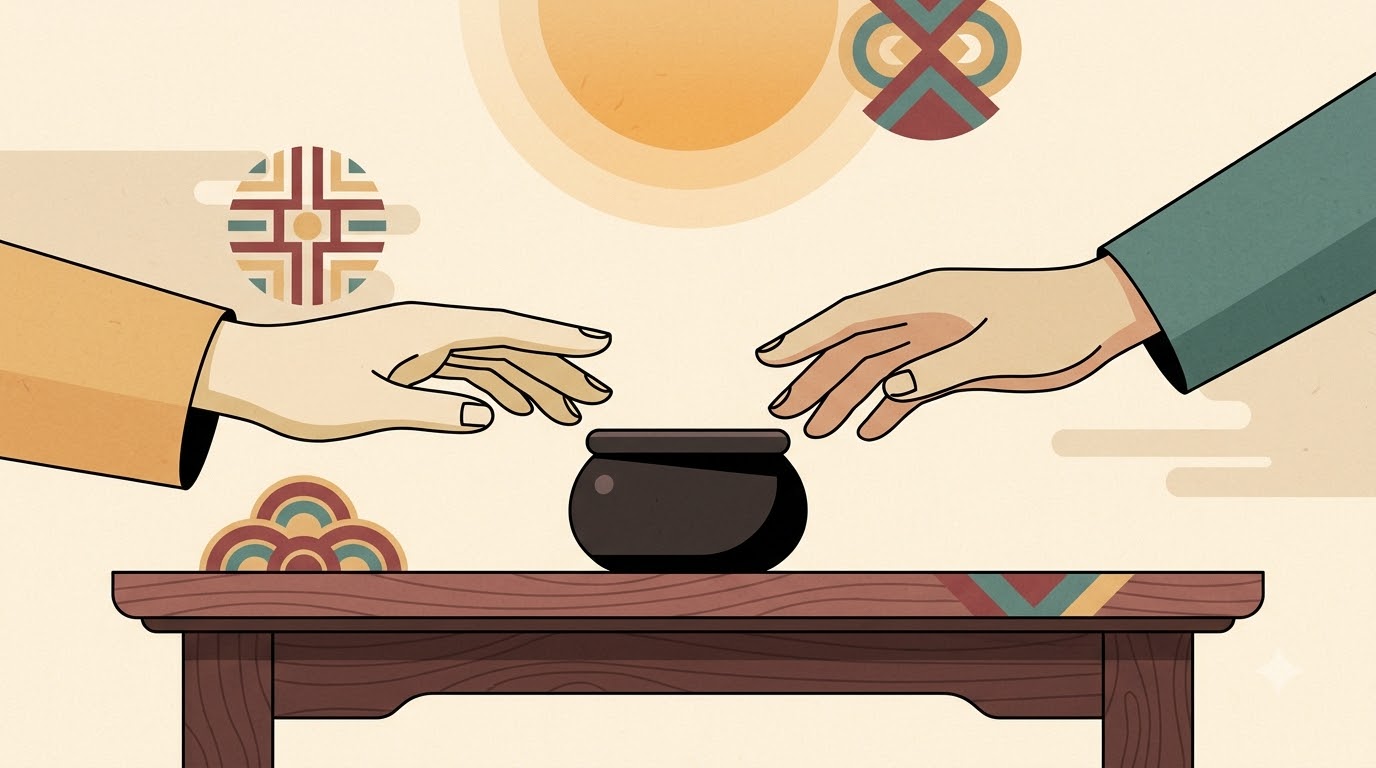
A familiar and high-stakes drama unfolds at the counter of every bustling Korean restaurant every single evening. The meal concludes, the plates are empty, and one person stands up to grab the bill. Instantly, two or three others lunge across the table, hands waving credit cards, voices escalating in mock outrage and genuine urgency.
"내가 낼 거야!" (nae-ga nael geo-ya!, "I'm paying!") "아니야, 내가 낼 차례야!" (a-ni-ya, nae-ga nael cha-ryeo-ya!, "No, it's my turn!")
Wallets are snatched, receipts are intercepted, and physical blocking maneuvers are deployed near the register. To many international observers, this chaotic scramble looks like an aggressive disagreement or a dramatic piece of politeness theater. Yet for the participants, this public tussle is a vital ritual. Of course, human beings are wonderfully diverse, and not every group of friends or colleagues approaches dining out with the exact same intensity; but across many social circles, this energetic competition remains a deeply ingrained cultural tendency.
In Korean social dynamics, paying for a group meal is an active investment in relational capital. The person who successfully pays claims a temporary position of provider and senior standing, while those who yield the bill are actively accepting a social debt that must be reciprocated in the future. Even the person who "loses" the fight and lets someone else pay is making a deliberate calculation about hierarchy, age, and future obligations, ensuring that social balance is meticulously maintained through currency and hospitality.
When examining the specific language used around these moments, a fascinating linguistic logic emerges. Native speakers often use the expression 한턱내다 (han-teong-nae-da, "to treat someone to a meal or drinks") to describe stepping up to cover the cost. More than simply paying a bill, 한턱내다 (han-teong-nae-da, "to treat someone to a meal or drinks") is an active social gesture used to mark personal milestones, express gratitude, or cement leadership within a peer group. It transforms a financial transaction into a generous public display of communal care.
This linguistic depth extends even further into how Koreans conceptualize the act of settlement itself. When a heavy financial burden is finally settled, the verb 치르다 (chi-reu-da, "to pay a bill, settle a debt, or undergo a major life ritual/test") is frequently employed. In Korean, the exact same verb used to pay a major expense ("돈을 치르다") is used to undergo a funeral, a wedding, or a grueling exam ("시험을 치르다"). This linguistic overlap reveals that financial settlements in social settings are treated with the solemnity of life rites.
Understanding these layers transforms a confusing restaurant spectacle into a window on relational psychology. The struggle at the register is never just about money. It is a real-time negotiation of mutual care, hierarchy, and belonging, written fluently in the language of shared meals.
Quick Questions
Why do Koreans fight over the restaurant bill instead of splitting it evenly? In many Korean social circles, paying for a group meal is an active investment in relational capital rather than a simple financial transaction. Competing for the bill allows participants to establish care, demonstrate generosity, and negotiate social standing, creating a balanced system of mutual reciprocity for future gatherings.
What does the verb 한턱내다 actually mean in daily conversation? The expression 한턱내다 (han-teong-nae-da, "to treat someone to a meal or drinks") goes far beyond simply paying for food. It is a purposeful social gesture used to mark personal milestones, express gratitude, or strengthen leadership within a peer group by turning a purchase into public hospitality.
Why is the verb 치르다 used for both paying bills and major life events? The verb 치르다 (chi-reu-da, "to pay a bill, settle a debt, or undergo a major life ritual/test") bridges financial settlements and monumental life rites like weddings, funerals, or exams. This overlap shows that Koreans subconsciously treat significant social expenses with the solemn weight of enduring life transitions.
As you navigate your next meal with Korean speakers, watch how the hands move toward the register not with reluctance, but with a quiet eagerness to care for the table. It is a reminder that language and culture live right there in the shared space between plates, where every transaction tells a story of connection.
🔊 Pronunciation Guide
Natural-sounding audio for the Korean in this article. Listen, then shadow out loud.
The exact phrases Koreans actually use every day — with the nuance notes that keep you from sounding like a textbook. Delivered as a beautiful PDF, free.
Send Me the Free PDFNo spam. Unsubscribe anytime.